
2026-10-07 · Ikaika Naeole
Handling Reduced Cooling From Vog In Big Island AC Systems
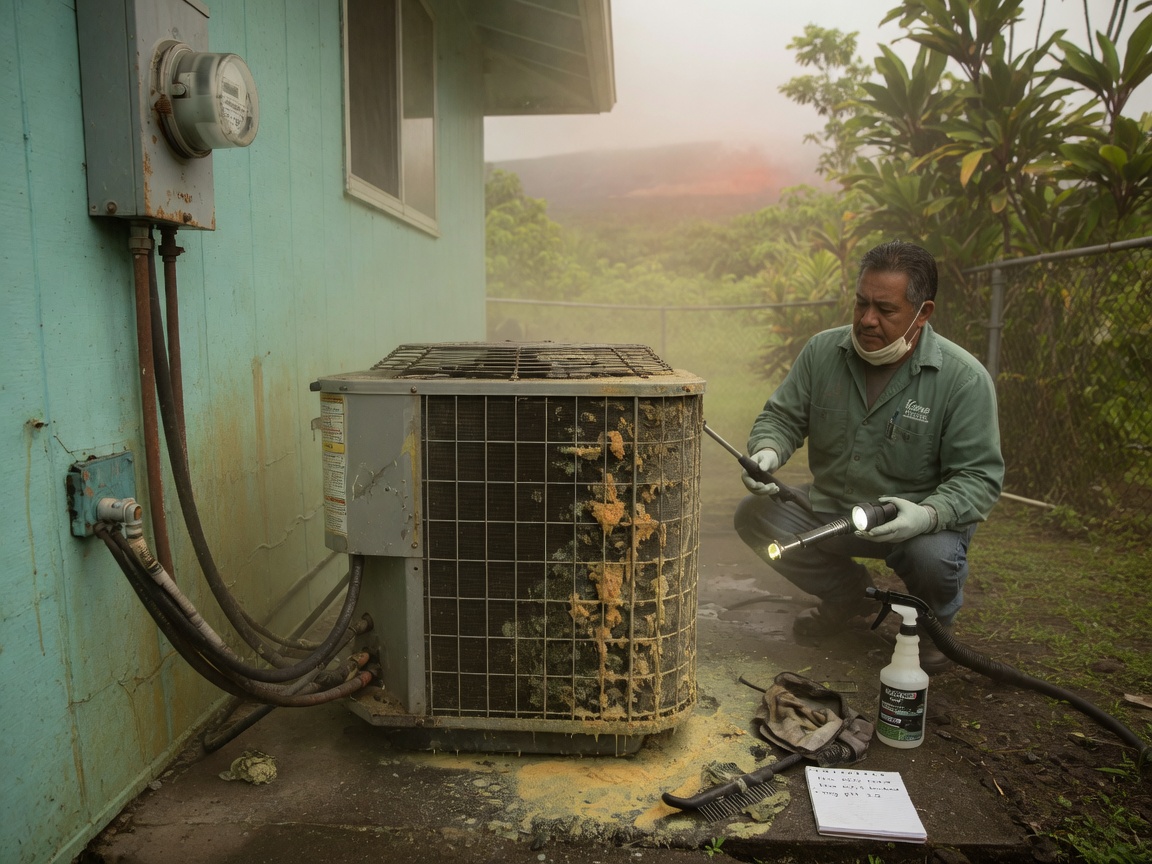
Vog particles from ongoing volcanic emissions settle on evaporator coils and condenser fins across Hilo, directly lowering heat transfer and forcing systems to run longer cycles without reaching set temperatures. In neighborhoods like Downtown Hilo and Waiakea, where many homes sit close to Hilo Bay, the combination of vog and frequent tropical rainforest moisture accelerates buildup on outdoor units. Homeowners in Puueo and nearby Keaau report similar drops in output during trade wind shifts that carry vog inland from Pahoa.
How Vog Deposits Affect Airflow in Hilo County Systems
Vog mixes with the area's consistent mild temperatures and high humidity to form a sticky film on coils that restricts refrigerant heat exchange. This layer builds fastest on units serving single-story homes in Waiakea where outdoor condensers sit low to the ground near vegetation. Reduced airflow then raises static pressure inside ductwork, making the blower motor work harder and pushing indoor humidity levels upward. Technicians routinely find that systems in Downtown Hilo lose measurable capacity after just several days of moderate vog because the fine ash adheres more readily than ordinary dust. Regular visual checks of both indoor and outdoor coils reveal the grayish coating that signals the need for targeted cleaning rather than a full refrigerant recharge.
Filter and Coil Cleaning Steps That Restore Capacity
Start by replacing the return air filter with a MERV-8 or higher pleated model rated for fine particulate, then inspect the evaporator coil through the access panel for visible vog residue. Rinse outdoor condenser coils with low-pressure water from the base upward, avoiding high-pressure sprays that bend fins in the salty coastal air near Hilo Bay. In homes around Puueo, where older duct runs often lack proper filtration, adding a whole-house media filter ahead of the blower reduces repeated loading. After cleaning, measure temperature split across the evaporator to confirm a 15-20 degree difference under normal load. These steps directly address the title question by reopening airflow paths blocked by vog without requiring component replacement.
When Reduced Cooling Signals Need for AC Repair
Persistent high indoor humidity or uneven room temperatures after coil cleaning point to deeper issues such as restricted duct leakage or failing blower capacitors common in Hawaii County systems exposed to vog. Technicians serving Waiakea often find that vog accelerates corrosion on electrical contacts inside air handlers, leading to intermittent operation. Scheduling AC Repair allows verification of refrigerant charge and fan speed settings that vog-related strain can throw off. For properties in Downtown Hilo with central systems, checking static pressure across the coil helps isolate whether the restriction sits in the filter, coil, or downstream ducts before any parts are ordered.
Ongoing Maintenance to Counter Vog in Tropical Conditions
Pairing monthly filter changes with quarterly professional visits keeps vog buildup from compounding during the wetter months when rain fails to fully wash outdoor coils. AC Maintenance visits include coil brushing and condensate drain clearing that prevent secondary mold issues in the humid Hilo climate. Readers dealing with repeated filter loading can also review AC Filter Replacement After Heavy Hilo Rainfall for timing guidance that overlaps with vog events. Properties near Rainbow Falls or Liliuokalani Gardens benefit from scheduling service before trade winds shift vog patterns from the southeast. Indoor Air Quality Testing provides baseline particle counts so homeowners can track whether vog mitigation steps are restoring normal cooling output over time.